Presented at the European Carbon Farming Summit 2026, this poster highlights key findings on the risks, opportunities and policy implications of integrating temporary carbon units from carbon farming into EU agri-food climate policy.
This poster summarises key findings from the socio-economic assessment of blue-green infrastructure measures conducted within the AMAREX project. The analysis covers 21 decentralised measures such as infiltration swales, tree pits, and green or retention roofs.
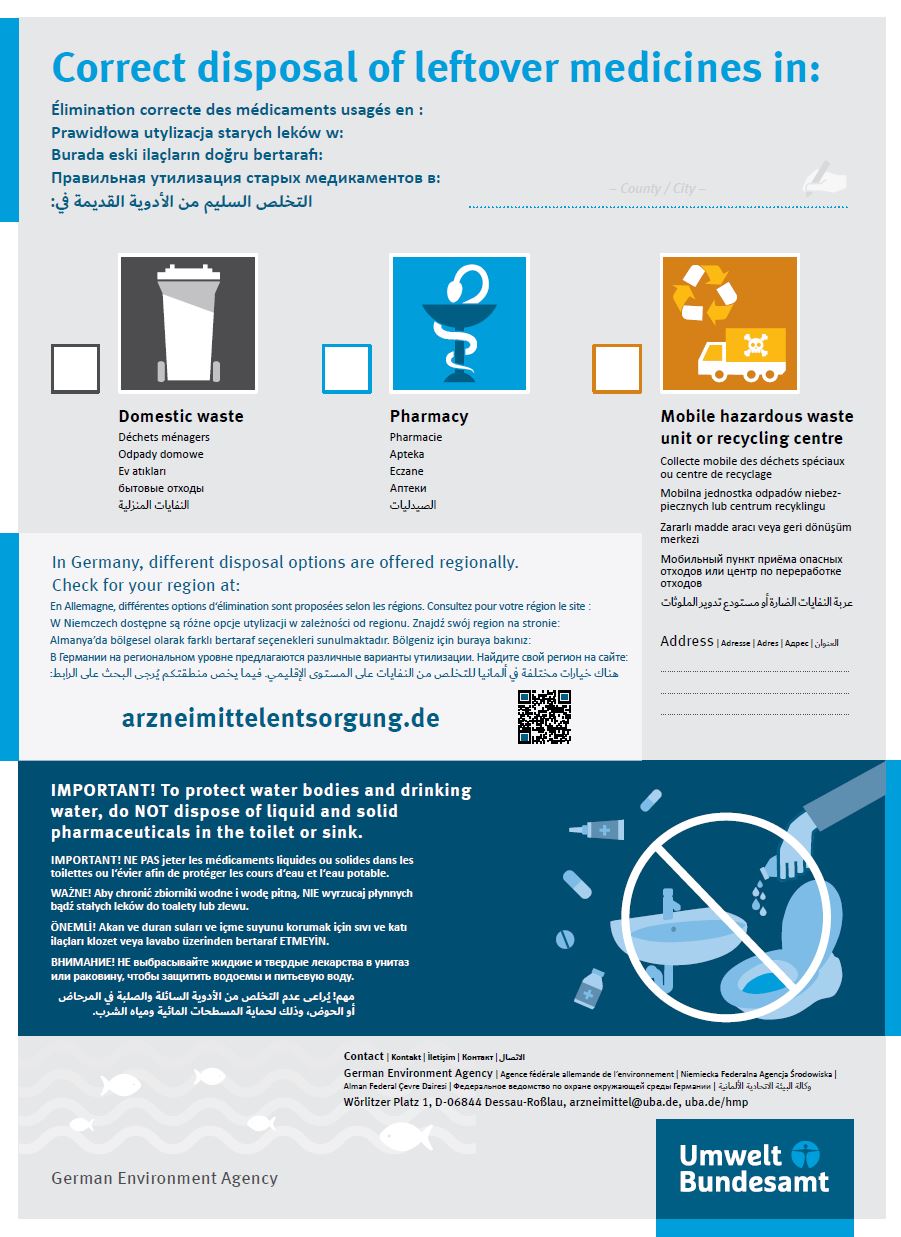
Many people think that old medicines should always be disposed of via pharmacies. Providing information about the applicable disposal methods, which vary from region to region, takes time in the pharmacy. The poster "Correct disposal of leftover medicines in: ...." is intended to ease the burden on staff by providing disposal information in writing on the sales floor. Other useful locations for the poster could include doctors' surgeries, hospitals, health advice centers, health insurance companies or waste disposal companies.
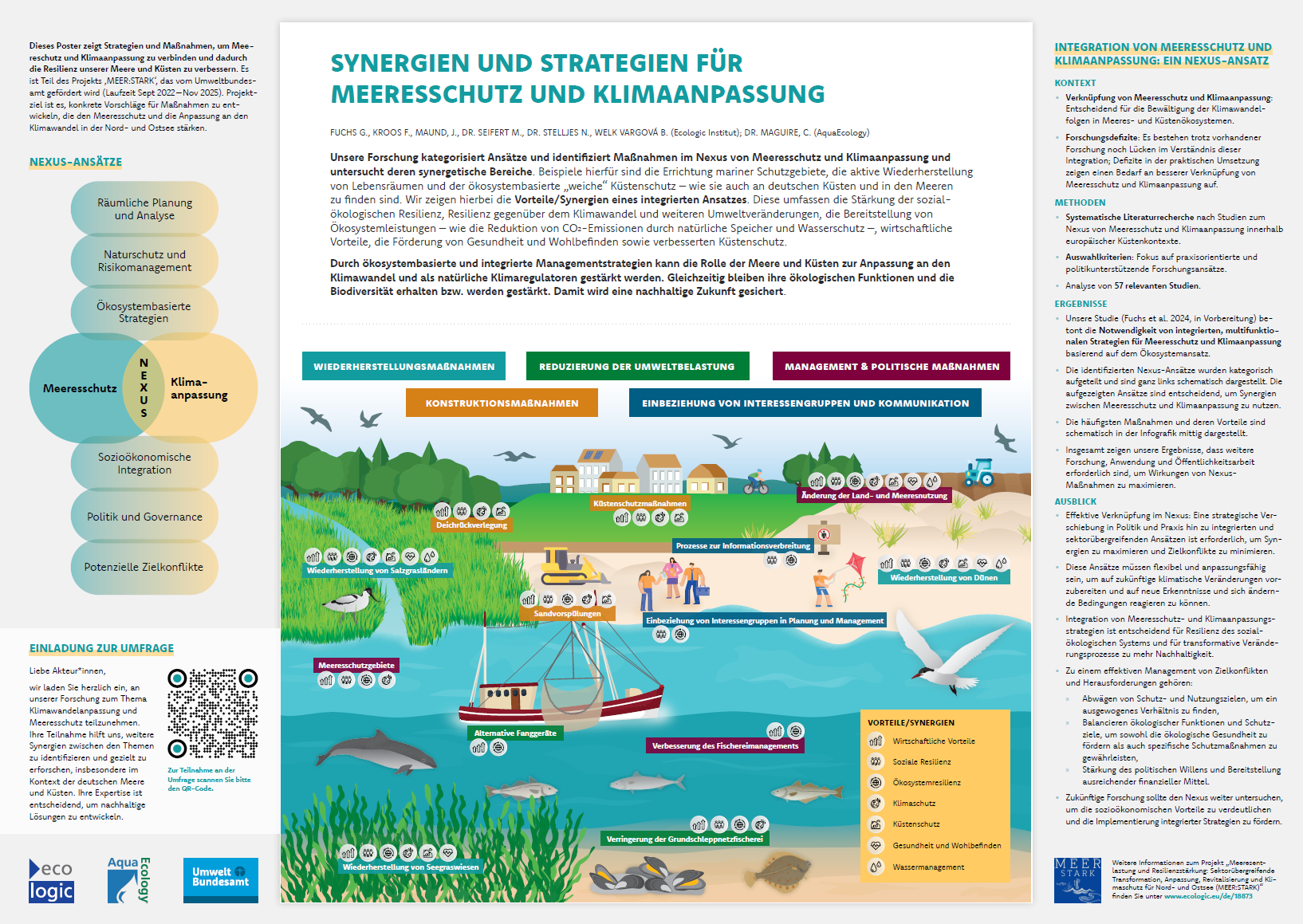
The poster ‘Synergies and Strategies for Marine Protection and Climate Adaptation’ presents key results and approaches of research on the integration of marine protection and climate adaptation. It shows how these two areas can be linked in order to effectively meet the challenges of climate change in marine and coastal ecosystems.
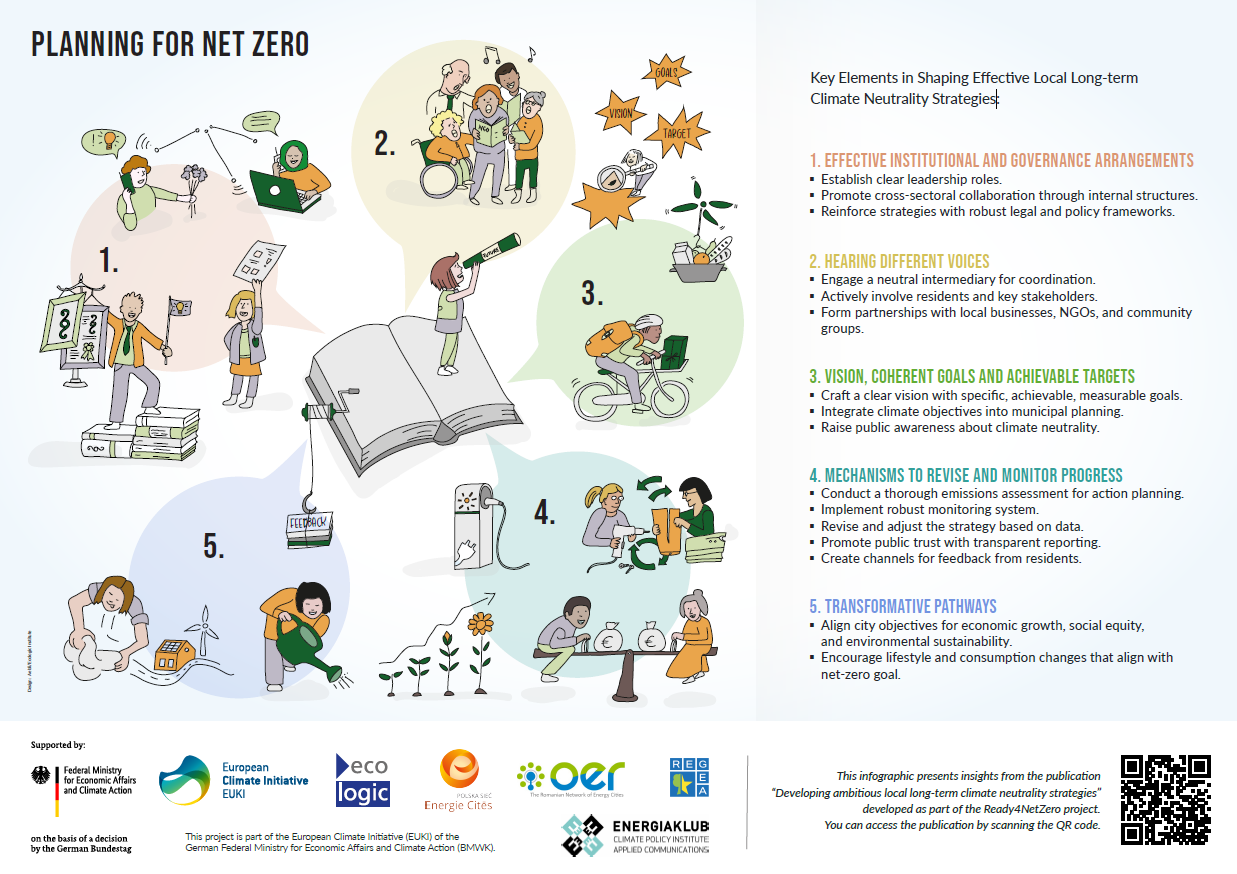
This poster conveys key content from the Ready4NetZero publication "Developing ambitious local long-term climate neutrality strategies". It presents five key elements for effective local long-term climate neutrality strategies.
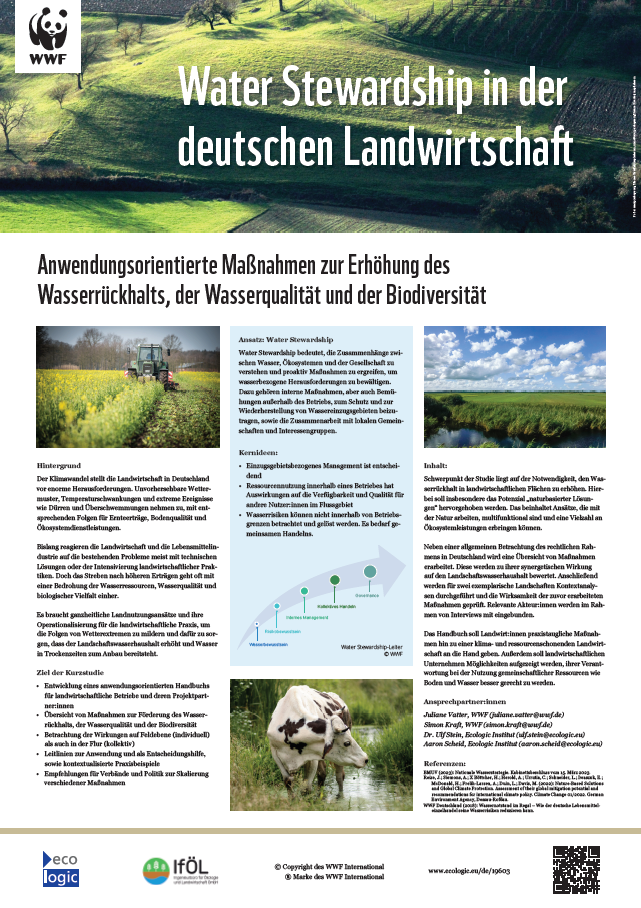
This poster provides a detailed insight into the new project "Water Stewardship" on behalf of WWF, which focuses on promoting water retention, water quality and biodiversity in German agriculture. The aim of this project is to strengthen resilience to climate change and improve ecosystem services through sustainable practices. The poster also refers to the conceptual background of the study as well as the future goals of the project, including the extension of the measures to other regions and political scales.
The Ecologic Institute, in cooperation with AquaEcology, developed an information poster addressing the environmental impacts of sunscreen products on marine ecosystems. The poster focuses on the release of sunscreen into the sea during swimming and bathing and highlights this pathway as a relevant but often underestimated source of chemical pressure. Estimates suggest that approximately 14,000 tonnes of sunscreen products enter marine environments each year, where certain ingredients may adversely affect marine organisms.
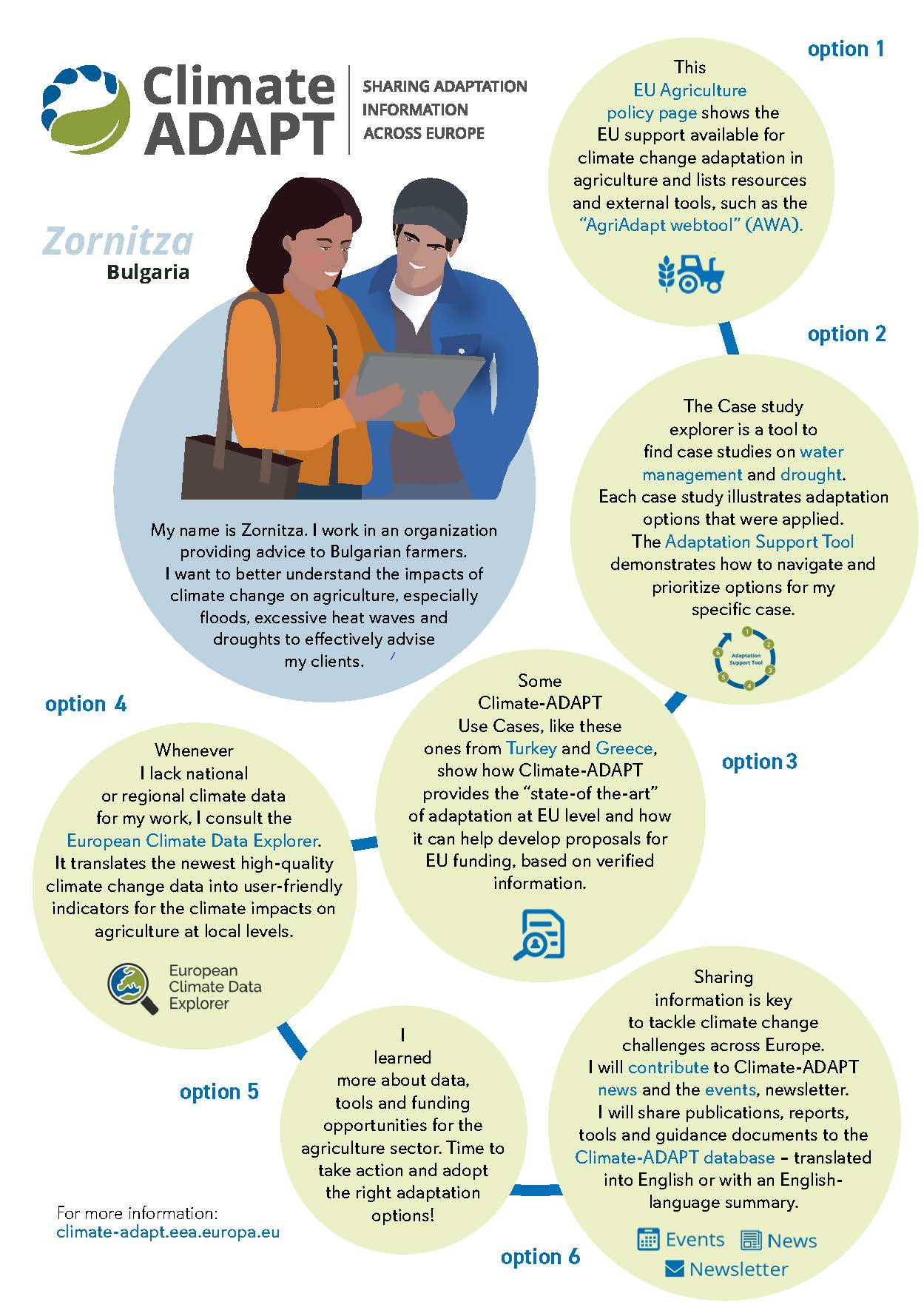
Ecologic Institute developed the stories of Zornitza, Piotr, Alexandru, Beata and Ana to illustrate the different challenges and needs of climate change adaptation experts in a storytelling format. They show how these experts find specific data and information sets on Climate-ADAPT to assess climate change risks, develop policies and plans, adaptation solutions including using green infrastructure options. The stories show how the characters use Climate-ADAPT in a basic way, by following clear steps or using alternative options.
Plastic waste is a global environmental problem, the consequences of our increasing plastic use are visible worldwide. Therefore, water pollution (oceans, rivers, lakes, groundwater) and plastics in the environment are among the top environmental issues of concern to many people. However, many myths, misconceptions, and ambiguities circulate in the plastics debate. This 20-part poster series sets out to clarify some of these issues. Join us for a fact check – would you have known?
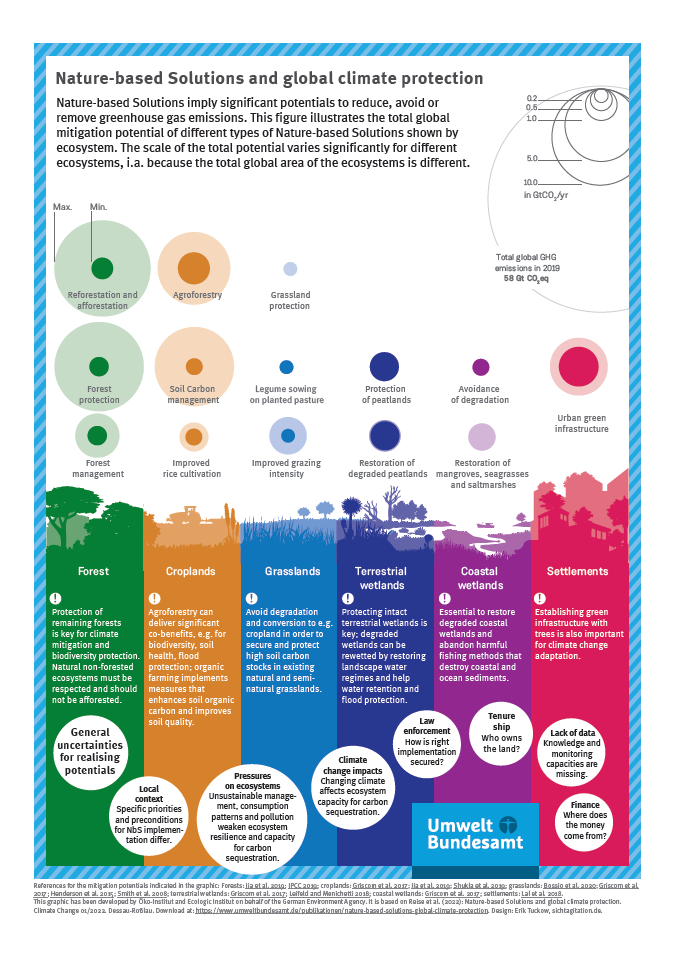
This infographic illustrates the total global mitigation potential of different types of Nature-based Solutions, shown by ecosystem. The scale of the total potential varies significantly for different ecosystems, i.a. because the total global area of the ecosystems is different.
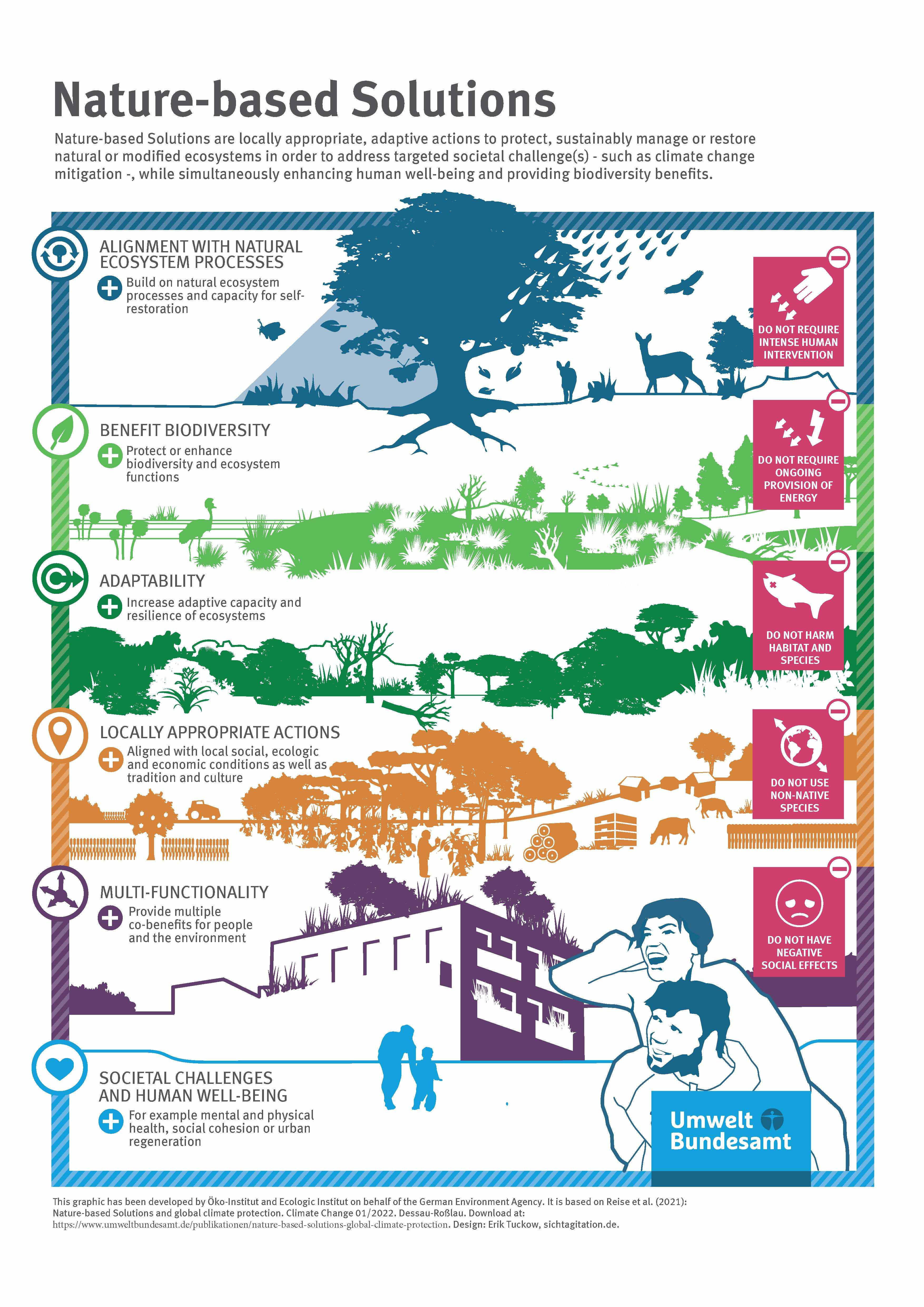
This infographic was created for the study "Nature-based Solutions and Global Climate Protection". It has been developed by Öko-Institut and Ecologic Institute on behalf of the German Environment Agency. It is based on Reise et al. (2022): Nature-based Solutions and global climate protection. Climate Change 01/2022. Dessau-Roßlau. You can download a print version of the infographic.
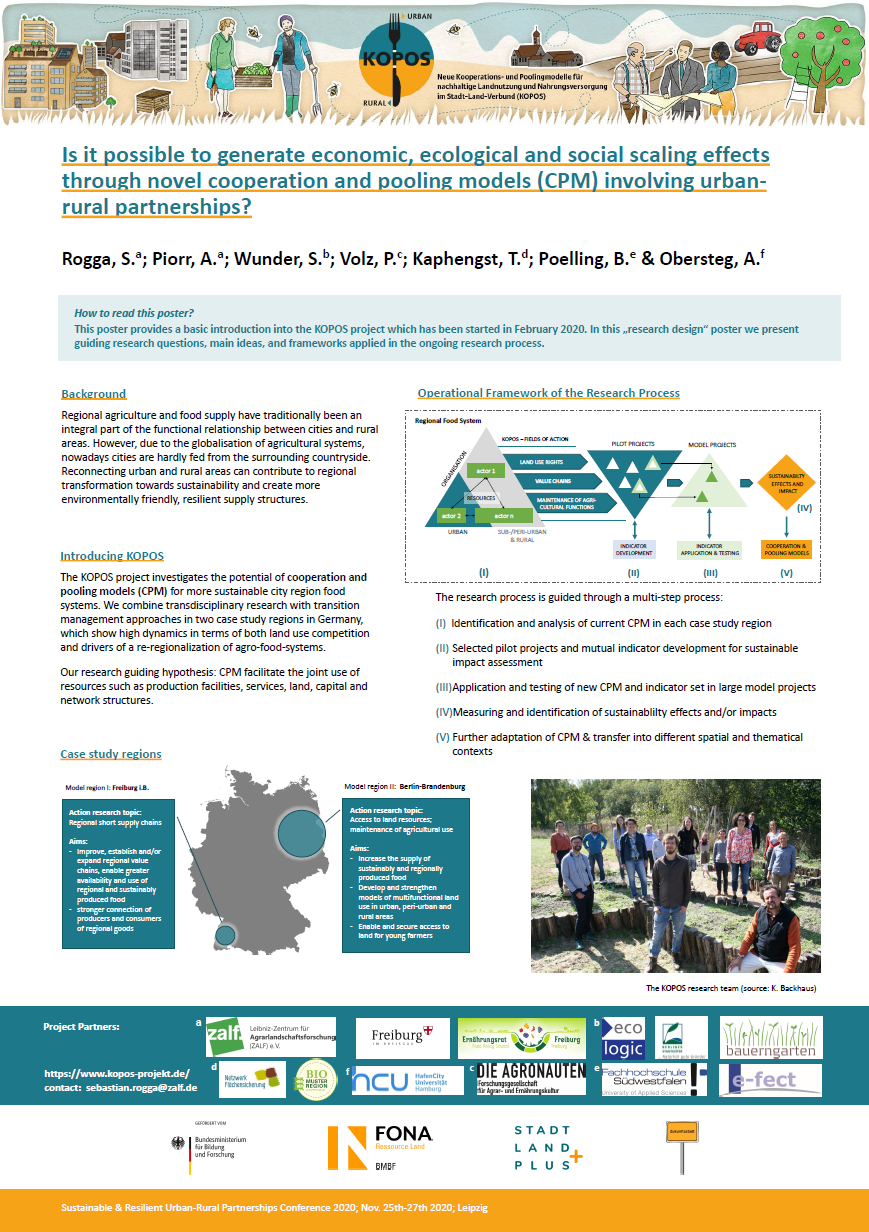
This poster provides a basic introduction into the KOPOS project, which has been started in February 2020. In this "research design" poster guiding research questions, main ideas, and frameworks applied in the ongoing research process are presented. The poster was designed according to the project's style guidelines for the "Sustainable & Resilient Urban-Rural Partnerships Conference 2020" in Leipzig.
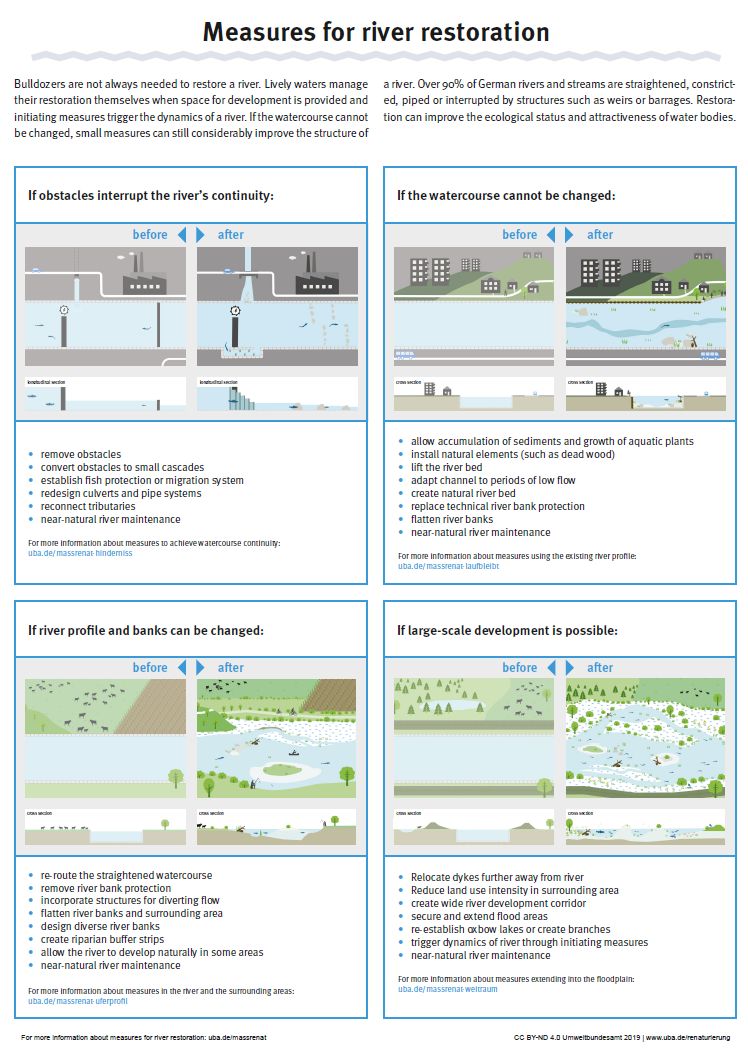
Over 90% of German rivers and streams are straightened, constricted, piped or interrupted by structures such as weirs or barrages. Restoration can improve the ecological status and attractiveness of water bodies. This interactive infographic lists and visualizes restoration measures for four different starting situations.
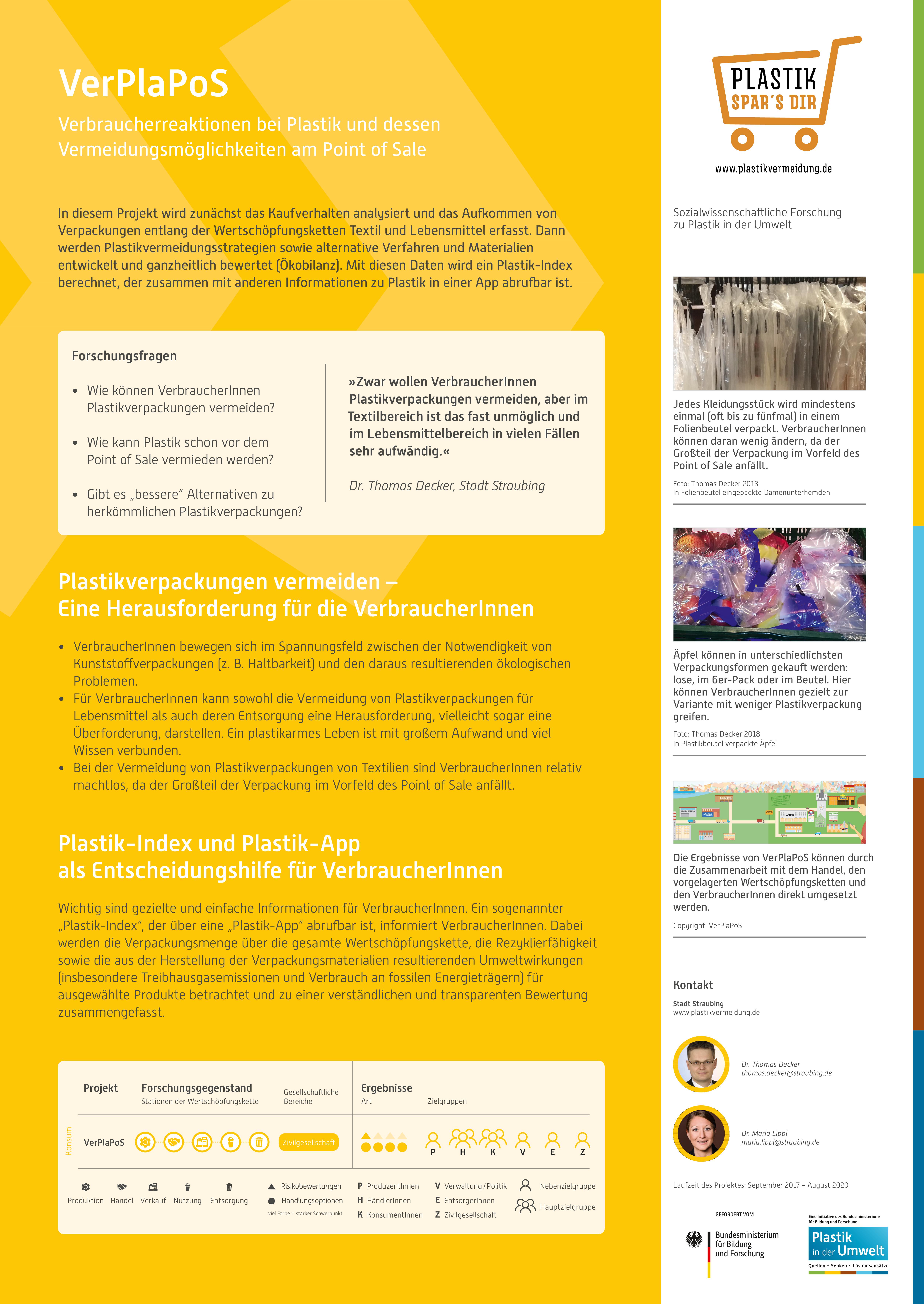
How is a topic such as microplastics socially problematised? How can consumers use plastics more sustainably? And what role do the interests and perceptions of different actors play in international plastics regulation?
These and other questions are posed by social scientists in a number of joint research projects funded by the Federal Ministry of Education and Research within the framework of the research focus "Plastics in the Environment". In this poster series, social science research from ten joint research projects is presented and first interim results are briefly and concisely summarised.